
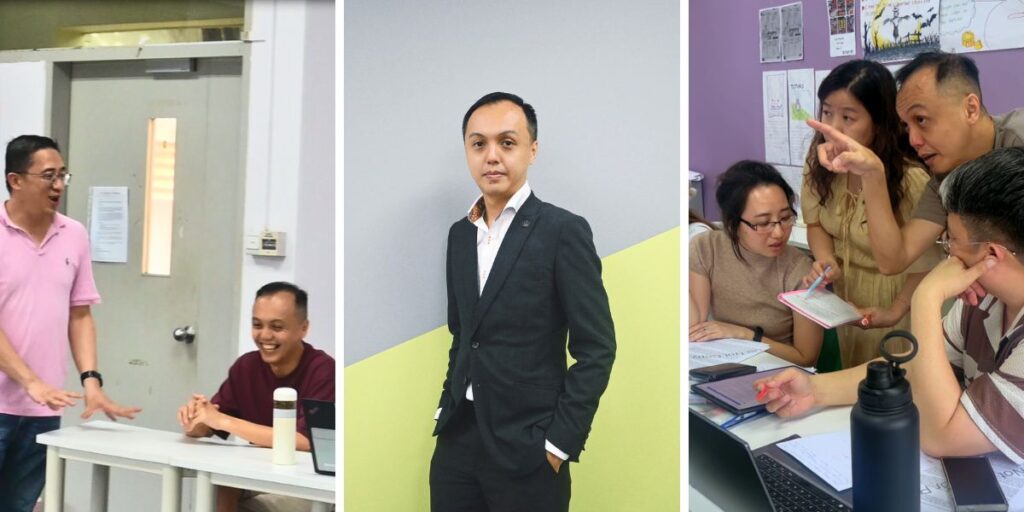
Kelvin Wu, a regional leader managing teams across seven countries, shares how EAIM’s International MBA reshaped his approach to strategy, leadership, and decision-making.
With nearly two decades of full-time working experience across project management, engineering, sales, and operations, Kelvin Wu, a recent graduate in from University of Wolverhampton’s International MBA programme at EAIM, had already built an extensive career leading regional teams across Asia-Pacific.
Overseeing operations across seven countries — Singapore, Malaysia, Thailand, Japan, Korea, Australia, and India — Kelvin manages a team of approximately 50 professionals, including Country Directors and senior managers. His role requires navigating diverse regulatory environments, cultural contexts, and varying levels of market maturity.
Despite this depth of experience, Kelvin made a conscious decision to pursue an International MBA.
His reason was simple: experience alone does not always provide the full picture.
When Experience Is Not Enough
After years of leadership, experience had already given Kelvin confidence and strong instincts. However, he recognised that experience can also create mental shortcuts and blind spots. “Experience gave me patterns, but the MBA gave me first-principles clarity. I wanted to
understand the why, not just the what.”
Rather than focusing solely on execution, Kelvin began asking deeper strategic questions:
- Why do certain leadership approaches work in some contexts but fail in others?
- How does strategy translate across cultures and markets?
- How do organisations truly make decisions beyond formal structures?
Through the International MBA, Kelvin found a structured way to interrogate instinct and pressure-test assumptions, enabling him to evaluate decisions more objectively.
Challenging Assumptions Built Over Years of Experience
One of the most valuable aspects of the programme for Kelvin has been confronting long-held assumptions. “This MBA challenged the idea that past success is always transferable.” Across different markets and organisations, factors such as culture, incentives, market maturity,
and timing can significantly influence outcomes. Another insight Kelvin gained relates to leadership speed and decision-making.“ Decisive leadership doesn’t always mean moving fast. Sometimes slowing down to frame the problem properly leads to better long-term decisions.” For Kelvin, the programme reinforced the idea that experience becomes truly valuable only when it is continuously questioned and reframed.
Learning From Leaders Across Different Industries
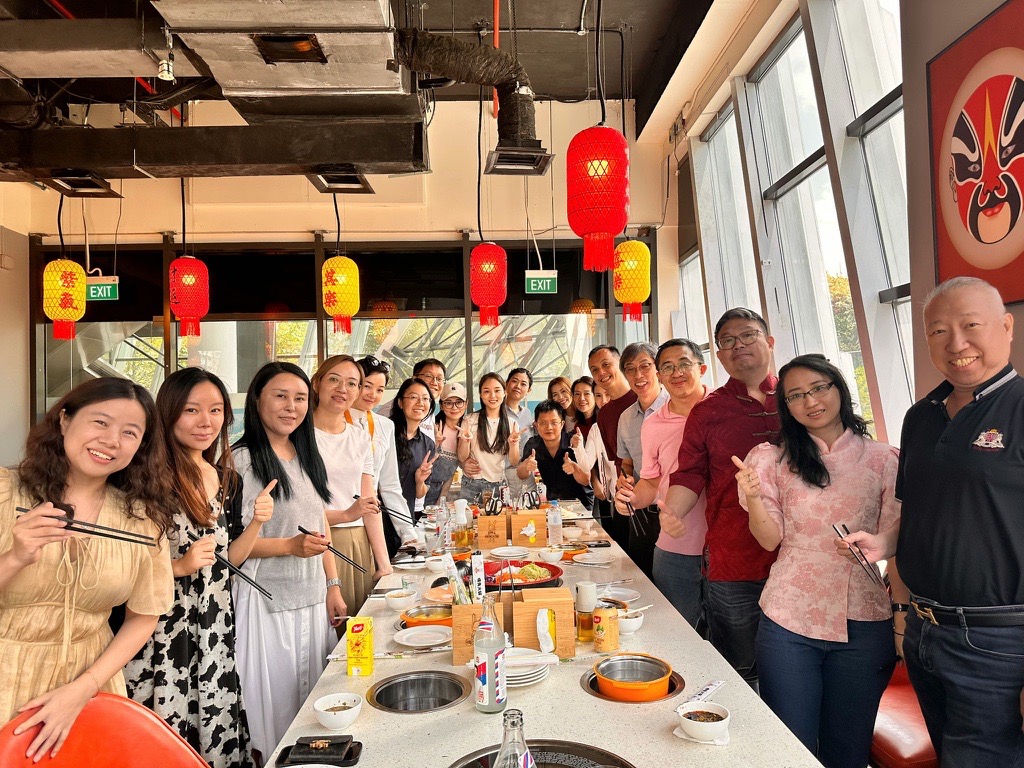
A key strength of the International MBA experience lies in the diversity of its cohort. Studying alongside professionals from sectors such as finance, technology, education, and consumer industries introduced perspectives that challenged many of Kelvin’s existing assumptions.
“It helped me separate principles from practices — what is universally true, and what is industry-specific.” This exposure broadened his thinking and improved his ability to translate ideas across industries and business contexts.
Leading Senior Leaders Through Influence
Managing experienced professionals across multiple countries requires more than authority. In one recent situation, Kelvin had to address a conflict between two experienced leaders within his organisation. Rather than relying on hierarchy to resolve the issue, he reframed the conversation through a leadership and succession lens. By positioning the situation as a reflection of leadership readiness and future responsibility, the individual was able to step back, reflect, and recalibrate their approach.“ Managing experienced leaders requires influence, not authority. The MBA strengthened my ability to frame conversations in ways that encourage reflection rather than impose control.” This shift from directing to framing and influencing has become a key leadership takeaway for Kelvin.
The Value of Unlearning
Perhaps the most meaningful insight Kelvin gained from the programme has been the importance of intellectual humility. “What I’m most proud of unlearning is the need to always be the most experienced voice in the room.”
The International MBA reinforced the value of:
- Asking better questions
- Listening more actively
- Allowing stronger outcomes to emerge through dialogue
These qualities have helped Kelvin lead senior peers more effectively and create a more collaborative decision-making environment.
A Thinking Reset for Experienced Leaders
For leaders with substantial professional experience, the International MBA serves a different purpose compared to early-career professionals. Rather than acting purely as a credential, it provides a structured space to rethink assumptions, sharpen judgment, and reconnect strategy with execution in a global context.
“EAIM’s International MBA works best as a thinking reset. It complements experience with structure and perspective.”
For experienced professionals leading complex teams, markets, and organisations, this combination of experience and structured strategic thinking can become a powerful catalyst for continued leadership growth.
Considering the Next Step in Your Leadership Journey
The International MBA, awarded by the University of Wolverhampton (UK), is designed for working professionals who want to deepen their strategic thinking while continuing their careers.
The programme brings together professionals from diverse industries, providing a platform to challenge assumptions, broaden perspectives, and strengthen leadership capabilities in a global business environment.
For leaders who already have extensive experience, the International MBA offers something equally valuable:
The opportunity to rethink how that experience is applied.